A Shift That Sneaks Up on You
For a long time, France didn't quite seem like a wellness country. Butter and wine. Long, unhurried meals. A culture that felt more comfortable savoring life than managing it.
But something has been changing — slowly, almost imperceptibly. The choices on the table are shifting. A growing awareness of health and balance has begun to weave itself into everyday life. Not in a dramatic, overhauled kind of way. More like a quiet accumulation — a gentle reweaving of texture, without disturbing the fabric of daily life itself.
The Same Meal. Different Standards.
In France, the most visible signs of this shift show up in public dining — and nowhere more clearly than in the school cafeteria, the cantine.
French school lunches have long been more than just nutrition. They're designed as an experience — a small education in how to eat. A typical meal follows the structure of entrée, main course, and fromage or dessert. Children sit down, take their time, and finish the meal. It's a rhythm learned early.
This approach is deeply tied to public policy. The French Ministry of Education and local governments have treated the school lunch as part of food education — a place where balanced eating and the habit of slowing down are cultivated together.
That philosophy hasn't changed as wellness trends have evolved. Rather than making school meals faster or more efficient, the focus has shifted toward using fewer processed ingredients and building menus around fresh, seasonal produce.
Under a 2018 law known as Loi EGalim, the French government mandated that public cafeterias source at least 50% of their ingredients sustainably — with 20% certified organic — by 2022. The city of Paris went further, introducing at least one plant-based option per week in school lunches from 2022, and gradually expanding the proportion of organic ingredients across participating schools. (Paris School Canteen Reform, 2022 municipal program)
The underlying attitude is telling: rather than reframing food as something to be controlled, France's approach keeps existing structures intact and quietly raises the bar from within.
Korea's path looks a little different. Here, eating has increasingly become something personally managed — right down to the product level. Convenience stores and supermarkets now have entire sections devoted to high-protein lunch boxes, low-sugar options, and salads as a standalone category. The first thing many people read on a food label isn't the name of the dish — it's the macros.
This extends well beyond what's on the shelf. Calorie-tracking apps, wearables that log food alongside activity — eating has shifted from a sensory experience to a system of data. In Korea, wellness has become a carefully maintained record.
Movement as a Way of Getting Around
The same difference shows up in how each culture relates to movement.
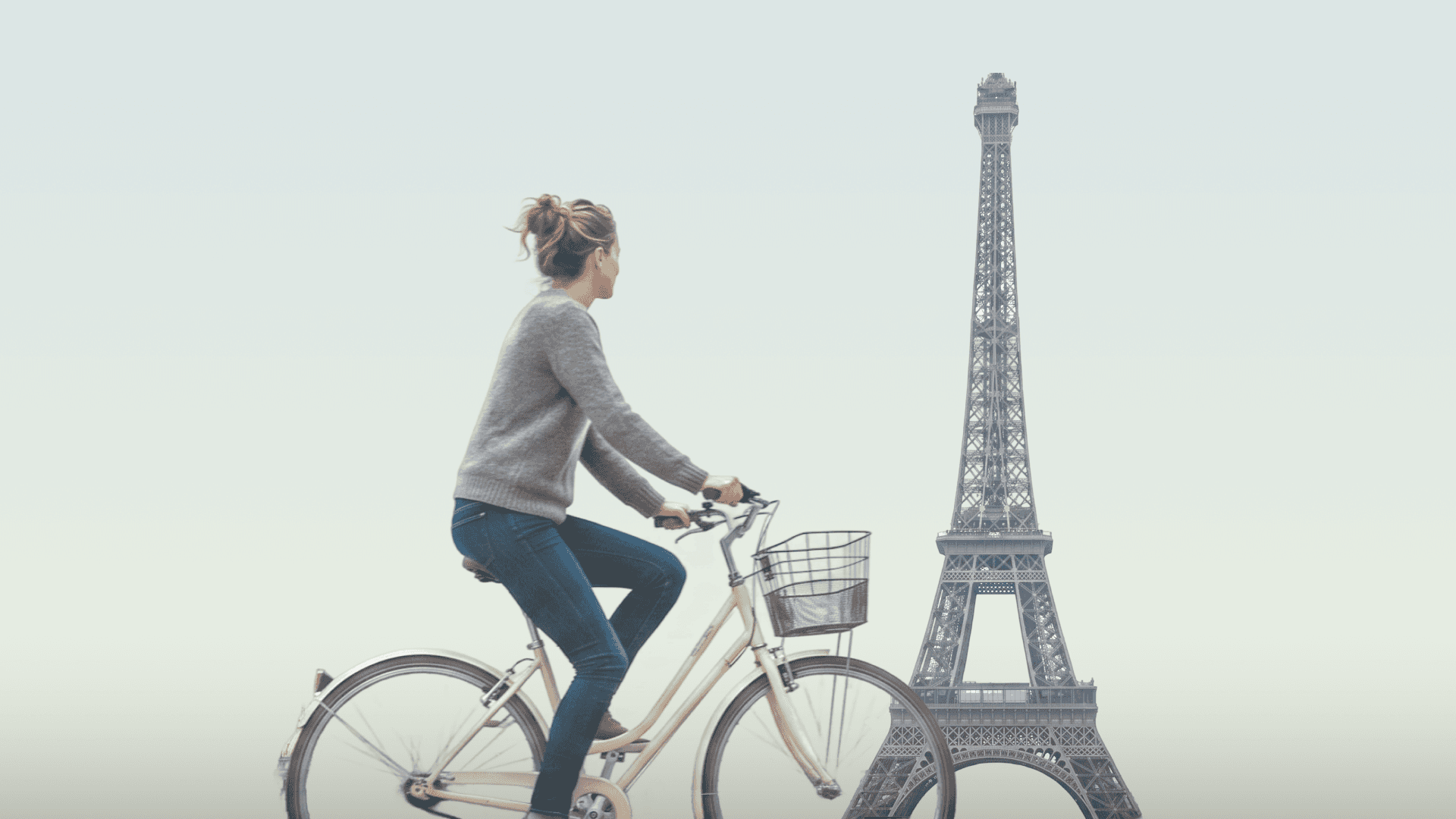
In France, exercise tends to exist within the rhythm of everyday life — embedded in how people move through a city rather than set apart from it. Urban design plays a real role here. In Paris, cycling-focused transportation policy has expanded steadily since the 2010s. The Vélib' bike-share network grew alongside a widening network of dedicated lanes, making it natural for physical activity to happen in the course of a commute or errand. Movement isn't something you schedule — it's something that accumulates.
Add to this the expansion of pedestrian zones along the Seine, and the extension of low-traffic neighborhoods (zones à trafic limité), and walking becomes the default. In France, exercise is less about going somewhere specific to work out and more about how you move through your day.
In Korea, it looks quite different. Exercise is typically structured — gym memberships, personal training, Pilates. Progress is tracked through smartwatches and apps. Workouts are scheduled, goals are set, results are recorded.
And exercise rarely travels alone. PT programs and Pilates sessions often come paired with dietary plans, calibrated toward specific outcomes like weight loss or body composition. The recent rise of body profile culture — where people document a defined physical transformation over a set period — captures this well: food and fitness as a single managed project, with a beginning, a middle, and an end.
Not a Goal. More Like a Balance.
The same direction — a healthier life — arrives by very different roads.
In France, wellness isn't really a performance system. It doesn't ask you to set targets and hit them. It asks something quieter: how do you maintain the balance you already have? Wellness here feels less like becoming something and more like staying something — holding onto a way of living that's already working.
How Change Happens
Change is happening in France. That much is clear. But it tends to move without upending the life it's entering. Less intervention. More preservation. The instinct seems to be: don't break what isn't broken — just tend to it more carefully.
It's a subtle difference, but it shapes how wellness takes root in a society.
Less Management. More Attitude.
The French approach suggests that wellness doesn't have to look like effort. Sometimes the version that lasts is the one that asks less of you — not more rules, but fewer disruptions. Not a new routine to follow, but a quieter attentiveness to the one you already have.
The question France seems to start from isn't what do I need to add?
It's what am I already doing — and how do I take care of it?