Proteolytic Enzymes Derived from Two Plants
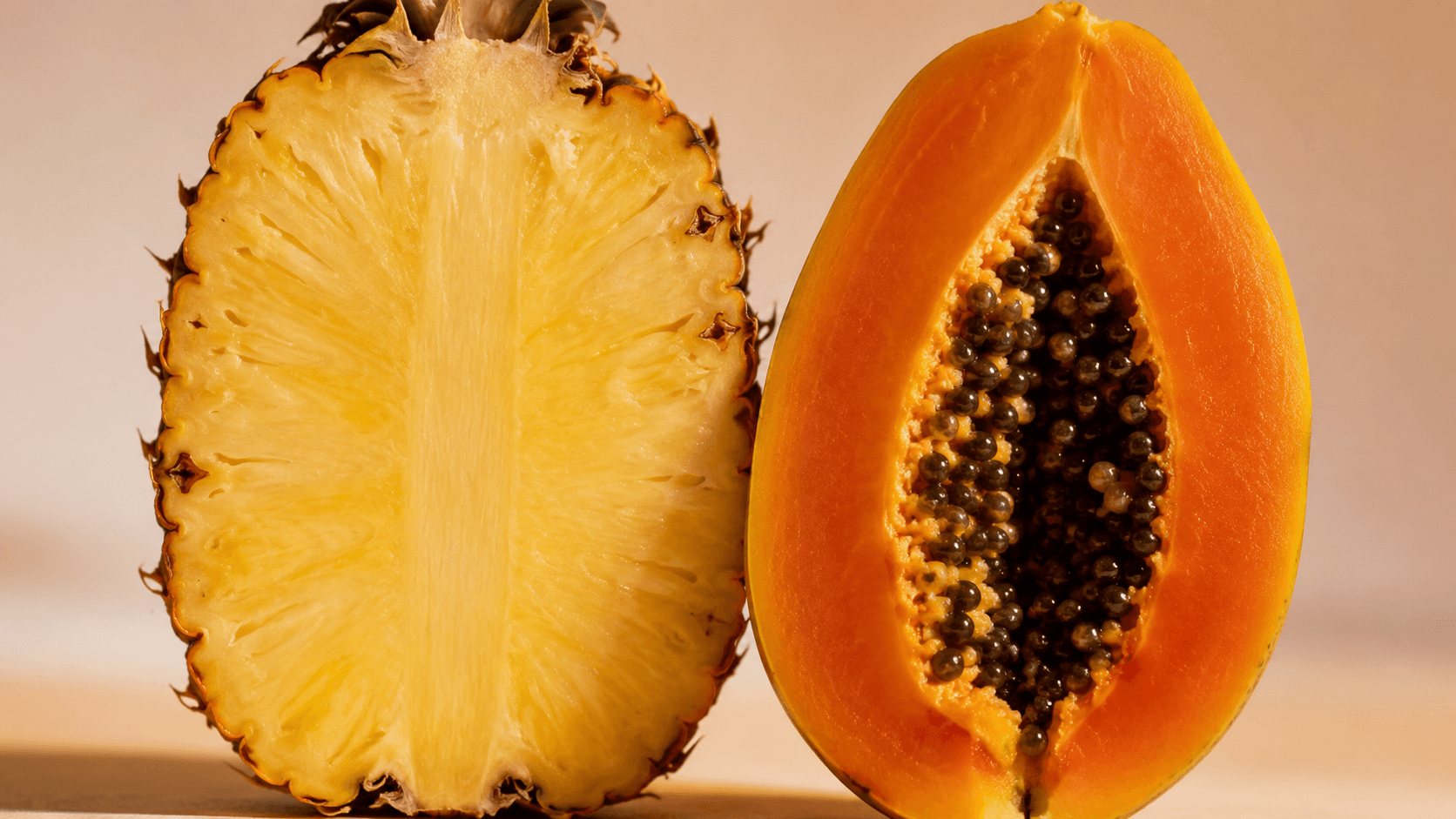
Bromelain is a proteolytic enzyme (protease) extracted from the stem of pineapple (Ananas comosus), while papain is an enzyme derived from the unripe fruit of papaya (Carica papaya).
Both molecules belong to the cysteine protease family, which breaks proteins down into smaller peptide units. They are used across three categories: food, pharmaceuticals, and dietary supplements.
Although both belong to the same category of proteolytic enzymes, they differ in their optimal pH and temperature ranges. When paired, their broader range of proteolytic activity and potential anti-inflammatory and edema-related applications can work across multiple dimensions.
The Two Enzymes Occupy Different Roles
Enzyme | Role |
|---|---|
Bromelain (pineapple stem) | Active across a pH range of 4.5–9.5, with activity across both the stomach and small intestine. It has accumulated clinical references related to inflammation and edema. |
Papain (unripe papaya fruit) | Active across a pH range of 3.0–10.5, with notable activity under acidic gastric conditions. It is characterized by a broad range of proteolytic activity. |
Bromelain has been used clinically since its introduction in 1957 and has been associated with the management of post-procedural edema. It has also been used in medical settings in Germany and Japan.
Papain has traditionally been used in the food industry as a meat tenderizer. In the supplement category, it is paired with other enzymes based on its broad proteolytic activity.
Dosage and Daily Accumulation
Intake | Role |
|---|---|
Bromelain: 500–2,000 mg daily | Clinical reference, with activity differentiated by GDU units |
Papain: 100–500 mg daily | Supplement-related reference |
30 minutes before meals | Protein digestion support |
Between meals / on an empty stomach | Anti-inflammatory and edema-related applications |
Bromelain activity is commonly measured in GDU (Gelatin Digesting Units), making it natural for products to indicate both the milligram content and enzymatic activity in GDU.
For post-procedural edema-related applications, use between meals is referenced clinically, while for protein-digestion support, taking it approximately 30 minutes before meals is a natural approach.
Who May Find This Relevant?
People following a high-protein diet, particularly those consuming more than 100 g of protein per day
People concerned about edema or bruising following procedures
Adults in their 30s–50s who are particularly concerned about digestive issues, especially protein digestion
There are also important considerations. People taking anticoagulants such as warfarin or aspirin should make decisions in consultation with a healthcare professional because of potential bleeding-related concerns. During pregnancy or breastfeeding, consultation with a healthcare professional should take priority.
People with allergies to pineapple, papaya, or latex should avoid these ingredients. Active gastric or duodenal ulcers also warrant consultation with a healthcare professional.
This content is provided for informational purposes only and does not replace medical diagnosis or treatment. Always consult a healthcare professional before making health-related decisions.